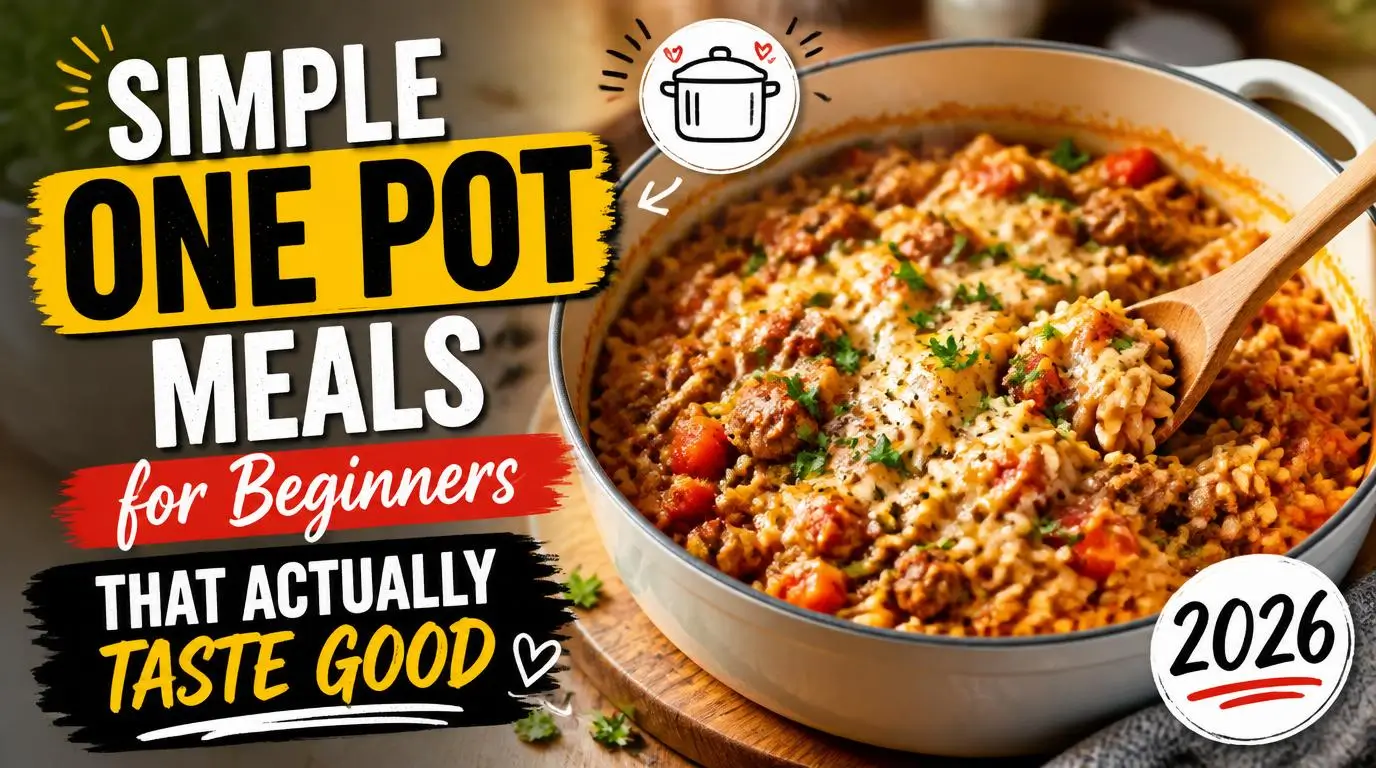
When I first started cooking for myself, simple one pot meals for beginners were the only thing standing between me and a third night of cereal for dinner. I was completely broke and deeply overwhelmed by recipes with forty-seven steps. My kitchen had exactly one decent pot to work with. Sound familiar? That single pot became my best friend. I cooked almost everything in it for an entire year. Some of those meals still make it into my weekly rotation today.
Why Simple One Pot Meals for Beginners Actually Work
Cooking with one pot isn’t just about being lazy. That is a solid perk though. It is genuinely smart cooking. When everything simmers together the flavors build on each other in ways that separate pans just can’t replicate.
Think about it. You brown garlic and onions then add broth. Suddenly that liquid carries all that flavor into your rice or pasta. You only have one pot to soak while you eat on the couch in peace.
For beginners specifically this method removes the most stressful part of making a meal. That is trying to time everything to finish at once. When your meat and vegetables cook in the same vessel you stop playing that frantic juggling act. Everything just finishes together. I burned more food trying to coordinate multiple pans than I ever did using one pot. The simplicity lets you focus on learning basic techniques like sautéing and deglazing without feeling overwhelmed.
1. Classic Chicken and Rice
This is the recipe I probably made two hundred times in my twenties. Season chicken thighs with salt and paprika then brown them in your pot with a little olive oil. Take the chicken out and sauté diced onion in the drippings. Add rice and chicken broth before putting the thighs back in to simmer for twenty-five minutes.
The rice absorbs those chicken drippings and turns golden. I toss in frozen peas during the last five minutes because it makes me feel like I’m eating a balanced meal. Bone-in thighs work best here since they stay juicy even if you overcook them slightly. You probably will at first. No shame in that.
2. Beef Chili
Chili is basically foolproof. That is exactly what a beginner needs. Brown a pound of ground beef in your pot and drain most of the fat. Add a diced onion along with a can of diced tomatoes and drained kidney beans. Toss in chili powder and cumin plus a pinch of cayenne. Let it simmer on low for at least thirty minutes.
The longer you wait the better it gets. I have let chili go for two hours on a lazy Sunday and the difference is wild. Top it with shredded cheese or whatever you have in the fridge. This freezes beautifully in individual containers so you are basically meal prepping without trying. I use a Dutch oven from Lodge for this and it cost me about fifty dollars. Completely worth it.
3. One Pot Pasta with Tomato and Basil
This one blew my mind when I first tried it. You put uncooked pasta and canned crushed tomatoes right into the same pot with garlic and water. Bring it to a boil and stir frequently. In about ten minutes you have pasta in a silky sauce that clings to every noodle.
The starch thickens the sauce as it cooks. It sounds too easy to be good but the result genuinely tastes like something from a restaurant on a weeknight. Use linguine for the best texture. I add red pepper flakes and Parmesan at the end. The whole thing costs maybe four dollars to make. That felt like a miracle when I was scraping by on a starter salary.
4. Creamy Tuscan White Bean Soup
Soup is the ultimate one pot meal. This version feels fancy without requiring any real skill. Sauté garlic and diced onion then add two cans of cannellini beans. Pour in broth along with a handful of spinach and some sun-dried tomatoes. Let it simmer for twenty minutes before stirring in a splash of heavy cream.
The beans make it hearty enough to call dinner. The sun-dried tomatoes add a tangy sweetness that honestly surprised me the first time. Serve it with crusty bread and you have got a meal that looks like you spent an hour on it. The whole process takes about twenty-five minutes from start to bowl. I make this at least twice a month during colder weather. My partner requests it more than anything else I cook.
5. Coconut Curry with Vegetables
If you have never made curry at home prepare to feel powerful. Heat oil in your pot and sauté diced onion until soft. Add two tablespoons of curry paste. I use Thai Kitchen red curry paste. Stir it around for a minute until it smells incredible then pour in a can of coconut milk and some broth.
Add whatever vegetables you have. Bell peppers and sweet potatoes work great. Sweet potatoes take longer so cube them small. Let everything simmer until the veggies are tender. This takes about fifteen to twenty minutes. Serve it over rice. You can make the rice in a separate small pot or even a microwave rice cooker. This was the dish that made me realize cooking at home could taste better than takeout. The curry paste does all the heavy lifting on flavor so you really cannot mess it up.
6. Sausage and Potato Skillet Stew
Grab some smoked sausage and slice it into coins. Hillshire Farm or Aidells both work great. Brown the coins in your pot. Add cubed potatoes and a can of diced tomatoes then pour in enough broth to barely cover everything. Season with garlic powder and smoked paprika.
Simmer with the lid on for about twenty minutes until the potatoes are fork-tender. The sausage gives the broth a smoky savory backbone that makes the whole thing taste way more complex than it is. This became my go-to fridge cleanout meal because you can throw in whatever vegetables are about to go bad. Zucchini works. Green beans work too. I have never made a bad version of this.
7. Lemon Garlic Shrimp Pasta
Shrimp cooks incredibly fast. That makes this one of the quickest meals on the list. Sauté minced garlic in butter. Trust me on the butter over olive oil here. Toss in raw shrimp and cook them for about two minutes per side until pink. Take the shrimp out.
In the same pot add broth and bring it to a boil. Cook your pasta right in that garlicky broth. When the pasta is almost done add the shrimp back in with lemon juice and red pepper flakes. Toss in fresh parsley if you have it. The broth reduces into a light sauce that coats everything. Total time is under twenty minutes. This is my impress someone on a date meal. It looks sophisticated but requires basically zero actual cooking skill.
Tips for Making One Pot Cooking Even Easier
A few things I learned the hard way will save you some frustration. Always heat your pot before adding oil. Cold oil in a cold pot leads to sticking. Sticking leads to frustration. Frustration leads to ordering pizza.
Mise en place matters more with one pot cooking than you would think. That is just a fancy way of saying chop everything before you start. Once that garlic hits the oil things move fast. You do not want to be dicing an onion while your garlic burns.
Season as you go instead of waiting for the end. A pinch of salt when you sauté onions and another when you add broth makes a huge difference compared to dumping it all in at the finish line. Buy a decent pot with a heavy bottom too. Thin cheap pots create hot spots that burn food. A good enameled Dutch oven will last you decades.
FAQs
What size pot works best for one pot meals?
A five to six quart pot or Dutch oven handles most recipes perfectly. It is large enough to fit pasta with sauce or a full batch of soup without overflowing. I have used my 5.5 quart Lodge Dutch oven for years. It handles everything from chili to curry without any issues.
Can you make simple one pot meals for beginners without meat?
You can. Swap protein sources like chickpeas or lentils into almost any recipe. The coconut curry and white bean soup on this list are naturally vegetarian-friendly. Beans add great texture and protein. They absorb whatever seasonings you throw at them.
How do you prevent pasta from getting mushy in one pot recipes?
Use the minimum amount of liquid needed and stir frequently. Start checking your pasta two minutes before the package says it is done. It keeps cooking in the residual heat even after you turn off the burner. Pulling it slightly early gives you a better texture every time.
Do one pot meals reheat well for leftovers?
Most of them reheat beautifully. Soups and curry are especially good the next day. Pasta dishes can dry out so add a splash of water or broth when reheating. I store leftovers in glass containers from Pyrex because they go straight from fridge to microwave without any issues.
What’s the biggest mistake beginners make with one pot cooking?
Overcrowding the pot when browning meat. If you pack too much ground beef in at once it steams instead of browning. You lose all that flavor when that happens. Brown in batches if needed. That caramelized crust on the bottom of your pot is where all the good stuff lives.
Conclusion
Cooking does not need to be complicated to be really good. One pot and a handful of ingredients can produce meals that make you genuinely proud of what you put on the table. What is the first recipe you are going to try?