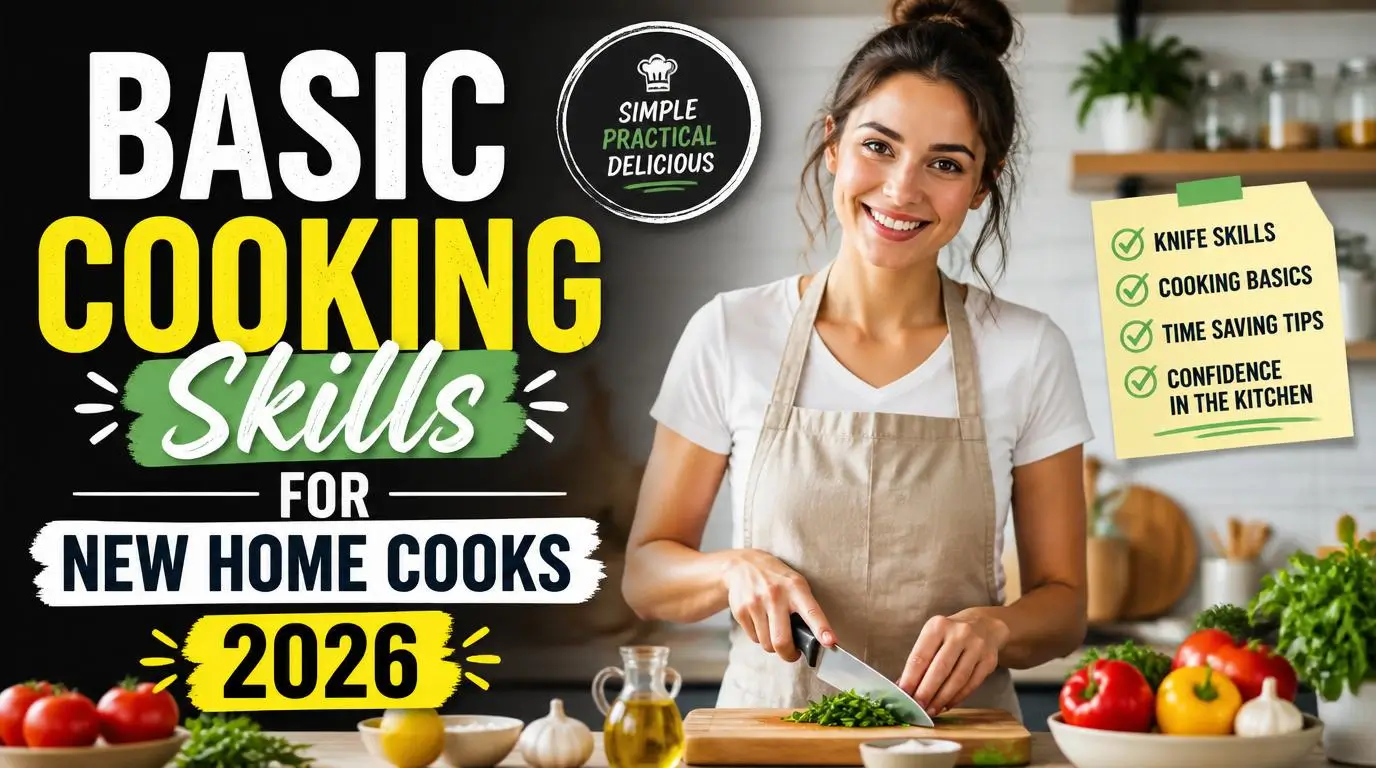
Learning basic cooking skills for new home cooks felt impossible when I first moved into my own apartment. I burned rice and undercooked chicken. I even set off the smoke alarm making actual toast. But here is what nobody tells you. Cooking is not some magical talent. It is just a handful of simple skills stacked on top of each other. Once I figured that out, everything changed. These are the exact skills that turned me from a kitchen disaster into someone who genuinely looks forward to making dinner.
1. Read the Entire Recipe Before You Start
This sounds painfully obvious. I ignored it for months anyway. I would start cooking and hit step four only to realize I needed to marinate something for two hours. Suddenly dinner was pushed to 10 PM.
Read the whole recipe first. Every single time. Check that you have all the ingredients and understand the timing. Know what equipment you need before you begin. This one habit alone cut my cooking stress in half. It also stopped me from making frantic grocery runs mid-recipe.
2. Learn Knife Skills (Even Just the Basics)
You do not need to chop like a TV chef. You just need to hold a knife safely and cut things into roughly even pieces. That way they cook at the same rate.
I watched a single YouTube video from Joshua Weissman on basic knife cuts and it changed everything. Practice dicing an onion. Learn the claw grip to protect your fingers. A sharp chef’s knife matters more than any fancy gadget. Invest in one good 8-inch knife and a cheap honing steel.
3. Understand Heat Control
Most beginners cook everything on high heat because they think it is faster. I did exactly this. I burned garlic and scorched onions. I dried out every piece of chicken I touched for three straight months.
Medium heat is your best friend. High heat has specific uses like searing a steak or boiling water. For sautéing vegetables or cooking eggs, medium or medium-low gives you control. Turn the dial down and give yourself time to react. Your food will taste dramatically better.
4. Season As You Go, Not Just at the End
Dumping salt on a finished plate is like trying to paint a wall after the furniture is already in the room. It kind of works but it is messy and uneven.
Add a pinch of kosher salt at each stage instead. Season your onions as they cook. Season your meat before it hits the pan. Do the same for your sauce while it simmers. Building flavor in layers makes food taste like something you would pay $18 for at a restaurant. I use Diamond Crystal kosher salt because the flakes are easy to pinch and measure by feel.
5. Master Cooking Eggs
Eggs are cheap and incredibly forgiving. If you can scramble and boil an egg well, you can feed yourself a real meal in five minutes on your worst day.
Scrambled eggs over low heat with butter will change your life. Stir them slowly. Pull them off the heat while they still look slightly underdone because they keep cooking on the plate. For fried eggs, a nonstick pan on medium-low with a little butter gives you perfect whites and a runny yolk every time.
6. Learn to Cook Rice Properly
Bad rice ruined so many of my early meals. I hit every wrong texture possible before I finally figured out the ratio. My rice was either mushy or crunchy.
For long-grain white rice, use 1 cup rice to 1.5 cups water. Bring it to a boil and drop to the lowest heat. Cover with a tight lid and leave it alone for 18 minutes. Do not lift the lid. Do not stir it. After 18 minutes, turn off the heat and let it sit covered for another 5 minutes. Fluff with a fork. If you cook rice often, a Zojirushi rice cooker is worth every penny.
7. Build a Small Spice Collection
You do not need 40 spices. You need about six that you will actually use. When I first stocked my kitchen I bought way too many jars. They sat unused until they turned into flavorless dust.
Start with kosher salt and black pepper. Add garlic powder, cumin, paprika, and Italian seasoning. That lineup covers tacos and pasta. It also works for roasted vegetables, soups, and marinades. Buy small containers and replace them every six months. Old spices are basically decorative at that point.
8. Taste Your Food While Cooking
This is one of those basic cooking skills for new home cooks that seems too simple to matter. It really does matter though. Tasting while you cook is the difference between good food and something that just feels off.
Keep a spoon nearby and taste at every stage. Does the sauce need more salt? Maybe a squeeze of lemon? Try a pinch of sugar to balance the acidity. Your taste buds are the best kitchen tool you own. I used to follow recipes blindly and wonder why the results were inconsistent. The answer was always that I was not tasting and adjusting.
9. Understand Mise en Place
Mise en place is a French term that means everything in its place. You prep and measure all your ingredients before you turn on the stove. It sounds fussy. It is actually the most freeing habit you can build.
When I started prepping everything first, cooking became calm instead of chaotic. Chop the onions and measure the spices. Open any cans you need. No more frantic chopping while something burns on the stove. Set out little bowls and prep everything. Then start cooking. You will feel like a completely different person in the kitchen.
10. Know When Your Pan Is Hot Enough
Cold pans cause sticking. Food sits there and glues itself to the surface. It tears apart when you try to flip it. I lost so many pieces of fish this way before learning one simple trick.
Heat your pan for 2 to 3 minutes on medium-high before adding oil. Add the oil and wait another 30 seconds until it shimmers. For stainless steel pans, drop a tiny bit of water in. If it dances and evaporates almost instantly, you are ready. This technique alone made me stop thinking I needed to cook everything in nonstick.
11. Learn One Pasta Dish Really Well
Pasta is the ultimate confidence builder. Pick one dish and learn it by heart. Make it your signature. Mine was cacio e pepe because it uses four ingredients and takes 15 minutes.
Once you own one pasta dish, you understand boiling and timing. You learn about building sauce and finishing with pasta water. That starchy pasta water is liquid gold by the way. Always save a cup before draining. It thickens sauces and ties everything together. From there you can branch into carbonara or a simple tomato sauce.
12. Stop Overcrowding the Pan
I used to throw everything into one pan because I did not want to dirty another one. Nothing browned. Everything just steamed. My stir-fry turned into a sad and watery pile.
Food needs space to develop color and flavor. When too much sits in the pan, the temperature drops and moisture gets trapped. Cook in batches if you need to. It takes slightly longer. The difference between steamed chicken and properly seared chicken is the difference between a boring meal and a great one. Your future self will thank you.
13. Get Comfortable with Basic Sauces
A good sauce covers a lot of cooking sins. Overcooked chicken can be saved with a pan sauce. Bland vegetables become interesting with a quick vinaigrette. Sauces are the secret weapon nobody talks about enough.
Start with a simple pan sauce. Cook your protein and remove it. Add a splash of chicken broth to the hot pan and scrape up the brown bits. Add a pat of butter and squeeze in some lemon. Swirl it together. That took maybe two minutes. It makes a Tuesday night chicken breast taste like a special occasion. Learning basic cooking skills for new home cooks often comes down to mastering the small finishing touches.
14. Use a Meat Thermometer
Guessing whether chicken is cooked through is stressful and sometimes dangerous. I spent my first year cutting into every piece of meat to check. I lost all the juices in the process.
Buy a digital instant-read thermometer. The ThermoWorks ThermoPop is around $35 and accurate within seconds. Chicken is done at 165°F. Pork hits 145°F. A medium-rare steak reads 130°F to 135°F. There is no guessing this way. You avoid the anxiety of dry overcooked meat made just to be safe. This single tool improved my cooking more than any pan or knife ever did.
15. Clean As You Go
Nobody wants to face a mountain of dirty dishes after cooking. The fastest way to hate your kitchen is to leave every bowl and cutting board until the end.
While something simmers or roasts, wash what you have already used. Wipe down the counter and put ingredients away. By the time dinner is ready, your kitchen should be mostly clean. This habit made cooking feel sustainable for me instead of exhausting. I went from dreading the aftermath to barely noticing it.
Frequently Asked Questions
What are the most important basic cooking skills for new home cooks to learn first?
Start with knife safety and heat control. Seasoning is the other big one. These skills touch every single thing you cook. Once you feel comfortable cutting ingredients and managing your stove temperature, everything else builds on that foundation. Learning to salt food properly at each stage matters too. Fancy techniques can wait. Get these right and your meals will immediately taste better.
How long does it take to get comfortable cooking at home?
Most people start feeling genuinely confident after about two to three months of cooking regularly. That means three to four meals a week. You do not need daily marathon sessions. Repetition builds muscle memory. After a few weeks, you will stop checking recipes for basic things like how long to sauté onions or when to flip a piece of chicken.
Do I need expensive cookware to cook well?
You do not need to spend a fortune. A good chef’s knife plus a 12-inch skillet will handle a lot. Add a sturdy pot and a sheet pan to handle 90% of home cooking. Brands like Tramontina and Victoria make excellent affordable options. Spend your money on a quality knife first. Upgrade cookware gradually as you figure out what you actually cook most often.
What’s the easiest meal for a complete beginner to make?
Scrambled eggs with toast are hard to beat. A simple pasta with garlic and olive oil is another great option. You could also try a sheet pan dinner with chicken thighs and roasted vegetables. All three require minimal skill and use few ingredients. They taste great with basic seasoning. Start with these and work your way up to more complex recipes once your confidence grows.
How do I stop burning everything I cook?
Turn your heat down. That is really it for most people. Medium heat handles the majority of stovetop cooking. You should also stay near the stove and pay attention. Set a timer if you are roasting something in the oven. Burned food almost always comes from too much heat or walking away at the wrong moment.
Conclusion
Cooking is honestly just a collection of small skills that stack up over time. Every single one of them is learnable. Give yourself permission to mess up a few dinners along the way because that is where the real lessons hide. What is the first skill on this list you are going to tackle this week?