Easy Homemade Cookies Without Chilling Dough
Last Tuesday my kid asked for cookies at 8pm on a school night. I had 25 minutes before bedtime and zero patience for a recipe that wanted me to chill dough for two hours. So I did what I always do now. I skipped it. Cookies were on the cooling rack by 8:22.
I used to think chilling was non-negotiable. Every recipe said to do it, so I did it, and I never questioned why. Then one night I forgot, baked the dough straight away out of laziness, and the cookies came out fine. Not identical to the chilled version. Just fine. That sent me down a rabbit hole of testing batches side by side, and here’s what I actually found.
Why Recipes Tell You to Chill Dough in the First Place
Chilling does three real things. It firms up the butter so it melts slower in the oven. It gives the flour time to absorb liquid, which makes the texture chewier. And it lets the sugars and flour sit together long enough to build a little extra flavor, kind of like how bread dough tastes better after it rests.
None of that is about safety. I want to say that clearly because I get asked this constantly. Raw cookie dough made with regular flour and a normal egg is not dangerous to bake right away. Chilling is a texture choice, not a food safety step. If you’ve been avoiding no-chill recipes because you thought skipping the fridge was risky, you can stop worrying about that part.
Also Read: Best Chocolate Cake Recipe From Scratch 2026
Can You Actually Skip It
Yes, for most everyday cookies. I’ve made this work with chocolate chip, oatmeal, peanut butter, and snickerdoodles without a single chill step, and the cookies still taste like cookies people want seconds of.
Where it gets harder is cut-out cookies, the kind you roll flat and cut into shapes. Warm dough is sticky and hard to roll, and it can lose the sharp edges of the cutter. I’ll get into a fix for that later, because it’s not actually impossible either.
The Three Things That Actually Matter
After testing this more times than I want to admit, it comes down to three adjustments. Get these right and you don’t need the fridge.
Butter Temperature
This is the one people mess up the most. You want butter around 65°F (18°C). That’s cooler than “room temperature soft” but warmer than fridge-cold. Press your finger into it. It should leave a mark but the butter shouldn’t feel oily or shiny. If it looks glossy, it’s already started to melt and your cookies will spread too thin.
I bought a cheap instant-read thermometer for six dollars just to stop guessing on this. Worth it.
A Little Extra Flour
Add 1 to 2 tablespoons more flour than a standard recipe calls for. This replaces the structure that chilling would normally build. Too much and the cookies turn dry and cakey, so don’t go overboard. I learned that the hard way with a batch that came out closer to scones than cookies.
A Hotter Oven
Bake at 375°F (190°C) instead of the usual 350°F (175°C). The higher heat sets the outside of the cookie faster, before the middle has time to fully melt and spread. Nine to eleven minutes is usually the sweet spot. Pull them when the edges look set but the centers still look a little underdone. They firm up as they cool.
My Actual No-Chill Recipe
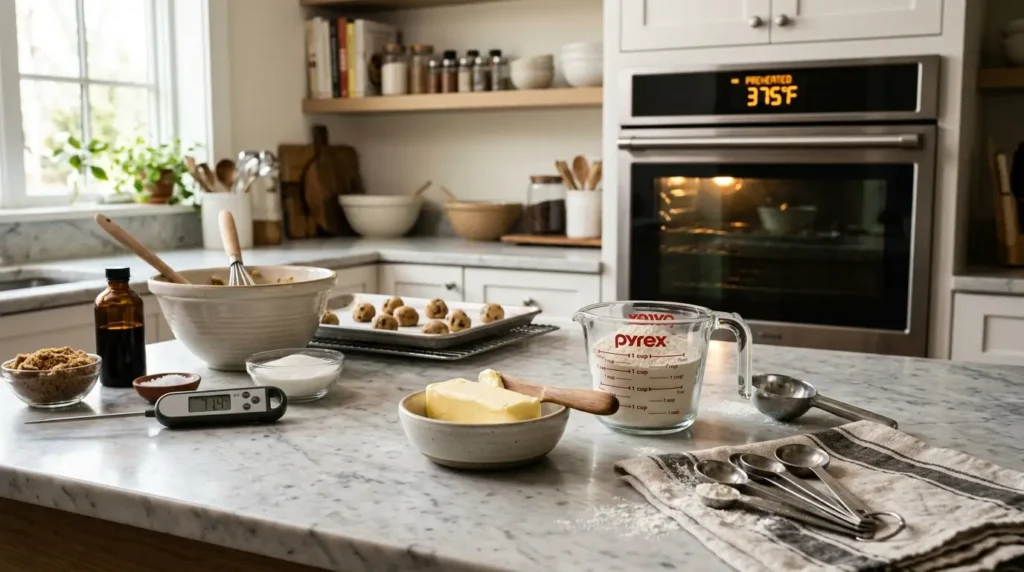
This is the version I make on repeat. No stand mixer required, though it helps.
| Ingredient | Amount |
|---|---|
| All-purpose flour | 2 1/4 cups |
| Baking soda | 1 tsp |
| Salt | 1/2 tsp |
| Butter, 65°F | 3/4 cup |
| Brown sugar | 3/4 cup |
| White sugar | 1/4 cup |
| Egg | 1 large |
| Vanilla | 1 tsp |
| Chocolate chips | 1 1/4 cups |
Cream the butter and sugars for about 2 minutes, just until it’s light in color. Don’t overdo this step, it doesn’t need to be fluffy like a cake batter. Mix in the egg and vanilla. Whisk your dry ingredients separately, then fold them in. Stir in the chocolate chips by hand.
Here’s a small thing that helps a lot: let the dough sit on the counter for 10 minutes while your oven finishes preheating. You’re not chilling it, you’re just giving the flour a few minutes to hydrate. It makes a noticeable difference in how the dough handles.
Scoop into balls about 1.5 tablespoons each, space them 2 inches apart, and bake at 375°F for 9 to 11 minutes. Let them sit on the pan for 5 minutes before moving them to a rack. They’ll look underdone when you pull them. That’s correct.
What About Cut-Out Cookies
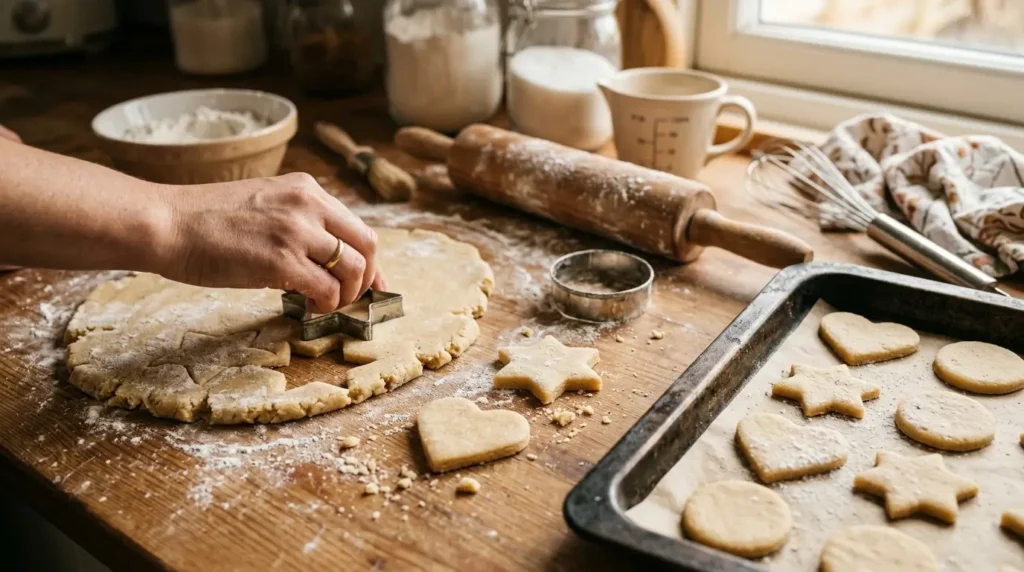
I said this wasn’t impossible, and it isn’t. The trick is different from the drop-cookie method. Instead of relying on cooler butter, you add baking powder to the dough. It firms things up structurally so the dough holds a cutter shape without needing to chill.
Roll it a little thicker than you normally would, about a quarter inch, and dust your surface with flour so it doesn’t stick. The edges won’t be quite as razor sharp as a chilled, rolled dough, but they hold shape well enough for regular shapes like stars, hearts, or rounds.
Where People Go Wrong
I’ve made every one of these mistakes myself, so consider this the list of things to skip.
- Butter too soft or melted. This is the number one cause of flat, greasy cookies. If your butter looks shiny, stick it in the freezer for 5 minutes before you start.
- Skipping the extra flour. Standard recipes are balanced around a chilled dough. Without the flour adjustment, the cookies spread more than you want.
- Oven too cool. A lot of home ovens run 15 to 25 degrees cooler than the dial says. I didn’t believe this until I bought a thermometer and saw it myself.
- Using margarine instead of butter. Margarine has more water in it and melts faster. It’ll make your spread problem worse, not better.
- Overmixing after adding flour. This builds gluten and makes cookies tough. Mix just until you don’t see dry streaks.
Chilled vs No-Chill, Honestly
| Chilled | No-Chill | |
|---|---|---|
| Time | 45 to 90+ minutes | Under 30 minutes |
| Thickness | Taller, puffier | Slightly flatter |
| Flavor | A bit deeper | Good, just simpler |
If I’m baking for a bake sale or want that thick bakery look, I’ll still chill. Most weeknights, I don’t bother. The difference is real but it’s not huge, and honestly most people eating your cookies will never notice.
Freezing Dough Instead of Chilling It
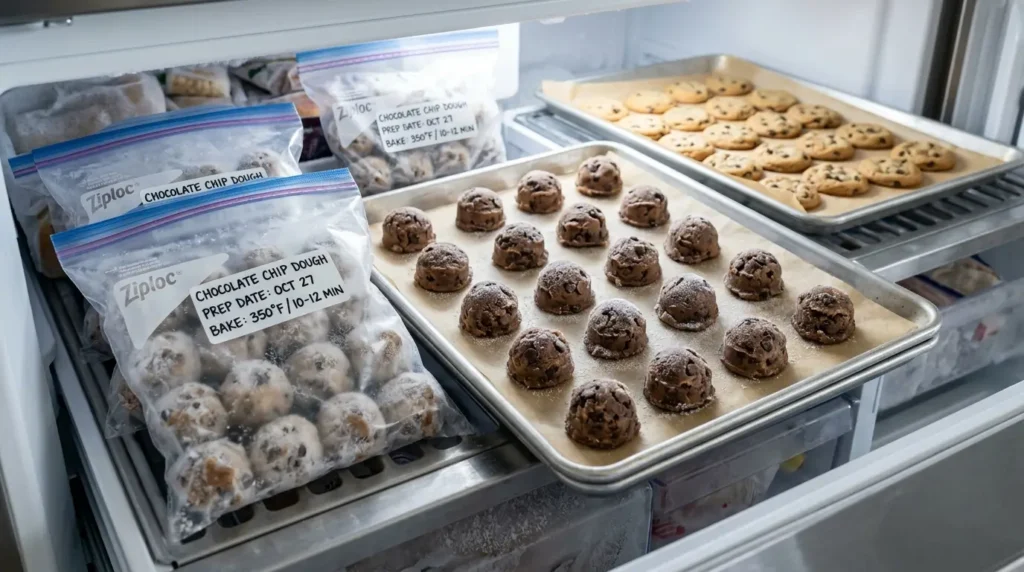
This confuses people, so let me clear it up. Freezing dough and chilling dough are not the same thing, even though they both involve cold. You can absolutely freeze no-chill dough balls for later. Portion them, freeze on a tray until solid, then move to a bag. Bake straight from frozen at the same oven temp, just add 1 to 2 extra minutes.
This is honestly my favorite trick. I keep a bag of dough balls in the freezer at all times, and I bake two or three whenever the craving hits. No thawing needed.
Adjusting for Where You Live
Kitchen temperature matters more with no-chill dough because there’s no fridge time to correct for it.
If your kitchen runs warm, cut the butter by an extra tablespoon or bump the oven to 380°F. In cooler climates, the butter firms up faster on its own and you probably won’t need to change anything.
At higher altitude, lower air pressure makes dough spread faster regardless of chilling. Cut the sugar slightly and raise the oven temp by 15 to 25°F to compensate. Humid regions tend to make dough stickier since flour pulls in ambient moisture, so add flour a tablespoon at a time until the dough feels workable instead of tacky.
Frequently Asked Questions
Is it actually safe to bake dough that hasn’t been chilled? Yes. Chilling changes texture, not safety. As long as your ingredients are normal grocery-store flour and eggs, you can bake immediately.
Why do most recipes still tell you to chill? Habit, mostly, and because chilled dough is more forgiving if your kitchen runs warm. But it’s not required for most drop cookies.
Will skipping the chill change the taste much? A little. Chilled dough develops slightly more depth from the flour and sugar sitting together. It’s a small difference, not a dramatic one.
How do I know if my butter is the right temperature? Press a finger into it. It should leave a dent without feeling greasy or shiny. Around 65°F (18°C) is the target if you want to be precise.
Can I use this method for any cookie recipe? Most drop cookies adapt well. Very high-butter recipes or cookies that need crisp defined edges are harder to convert.
What if my cookies still spread too much? Cut the butter back slightly, add another tablespoon of flour, and check your oven temp with a thermometer. Nine times out of ten it’s one of those three things.
Can I rest the dough for just 10 minutes instead of skipping entirely? Yes, and I’d actually recommend it. It’s not the same as a full chill, but it helps the dough handle a bit better with almost no time cost.
How long can cookie dough sit out before I have to bake it? A few hours at room temperature is generally fine for texture, though the dough will get softer and stickier the longer it sits. If you’re not baking within an hour or two, it’s better to freeze it than leave it out.
Leave a Reply