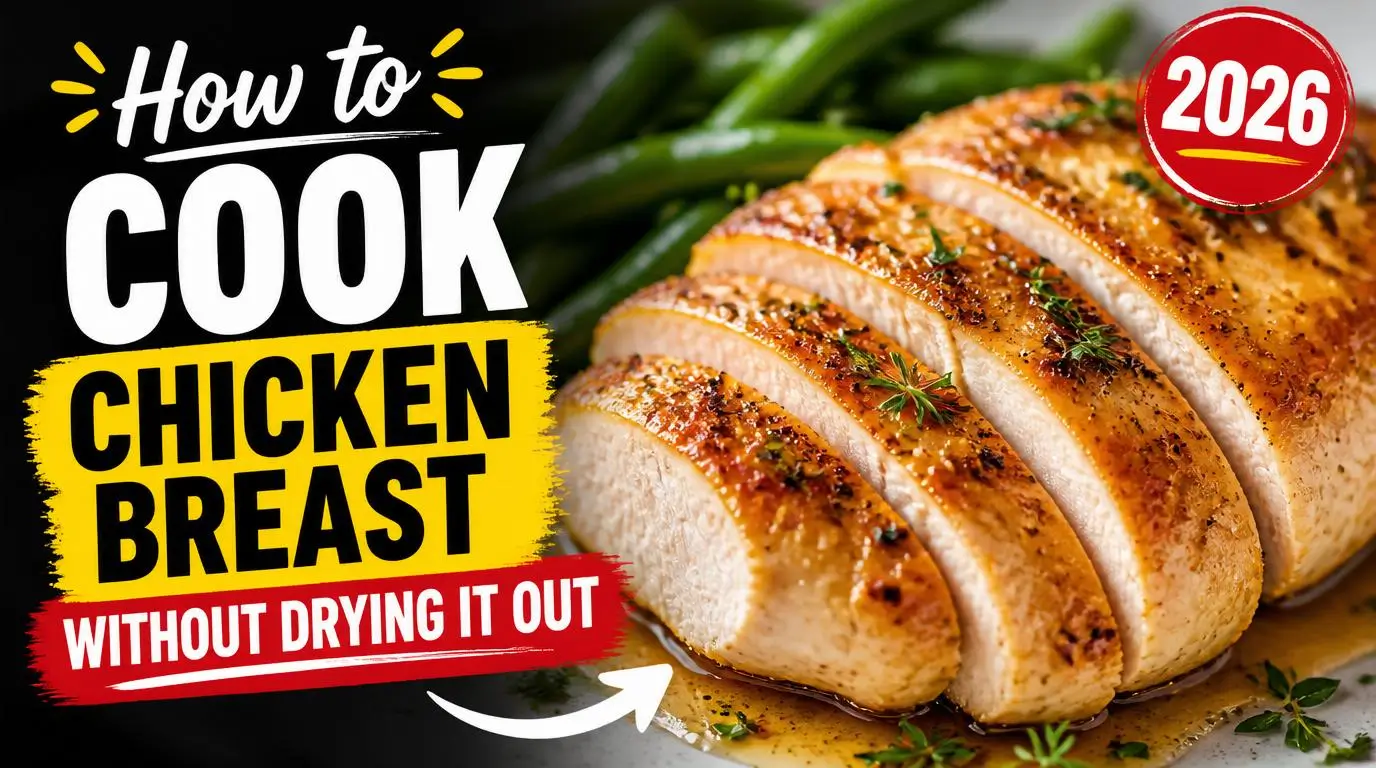
Figuring out how to cook chicken breast without turning it into cardboard felt like cracking an impossible code for me. I spent years slicing into sad, chalky meat and wondering where I went wrong. Turns out I was messing up almost everything. The good news is that juicy chicken becomes pretty automatic once you understand a few basic principles. You do not need fancy equipment or a culinary degree. Just a few honest tweaks to your normal routine.
Why Chicken Breast Dries Out in the First Place
You have to understand the problem before you can fix it. Chicken breast is incredibly lean. It has practically zero fat compared to thighs or drumsticks. Fat keeps meat moist while it cooks. Without that fat, you get a very narrow window between perfectly done and completely dried out.
Most people overcook chicken because they are terrified of serving raw meat. That fear makes sense since nobody wants food poisoning. The USDA says chicken is perfectly safe at a 165°F internal temperature. Most home cooks blow right past that number and hit 180°F without even realizing it. Those extra fifteen degrees are the difference between a juicy dinner and jerky.
Uneven thickness is the other major culprit. A typical breast is thick on one end and tapers off on the other. The thin side turns to rubber while the thick side finishes cooking. That is exactly why one bite tastes fine and the next bite feels like chewing on a shoe.
Pound It Flat (Seriously, This Changes Everything)
This one step improved my cooking more than any other technique I have tried. Put your chicken breast inside a zip-top bag or between two pieces of plastic wrap. Grab a meat mallet, a rolling pin, or even a heavy skillet and pound it to an even thickness. You want it to be about ¾ inch thick all the way across.
Even thickness leads to even cooking. The entire piece of meat hits 165°F at the exact same time. You no longer have to wait for the thick end to finish while the thin end turns into rubber. I picked this up from a cooking show years ago and honestly cannot go back to cooking chicken any other way. It cuts your cooking time almost in half too, which is a lifesaver on busy weeknights.
Pounding meat can feel a bit aggressive. If you hate the idea, try butterflying the breast instead. Just slice it horizontally through the middle and open it up like a book. You get the same result with a lot less mess.
Brine Your Chicken (Even a Quick Brine Works)
Brining is easily the most underrated trick for keeping white meat juicy. A basic brine is nothing more than water and salt. Use roughly one tablespoon of kosher salt for every cup of water. Submerge the chicken for fifteen to thirty minutes. The salt actually draws moisture into the meat while seasoning it all the way to the center.
I skipped this step for years because it felt like too much extra work. Fifteen minutes is really nothing though. You can prep the rest of your meal while the chicken sits in the bowl. The texture difference is obvious from the very first bite. The meat stays plump and tender even if you leave it on the heat a little too long. It gives you a much bigger margin for error.
You can toss a teaspoon of sugar or some crushed garlic cloves into the water for more flavor. Buttermilk makes a fantastic brine as well because it tenderizes the meat and adds a nice tang. Chick-fil-A uses a pickle juice brine. That trick works perfectly in a home kitchen if you want to try it.
Get a Meat Thermometer (Stop Guessing)
If you only take one piece of advice from this post, let it be this. Go buy an instant-read meat thermometer. I use a ThermoWorks ThermoPop that cost about twenty bucks and reads temperatures in three seconds. The Thermapen is a bit faster and more popular, but either model will completely change how you cook.
Slicing into the chicken to check for doneness lets all the juice bleed out onto your plate. That completely defeats the purpose. Judging by color or how firm the meat feels is wildly unreliable. I spent years thinking I could tell if chicken was done just by pressing on it with my finger. I was wrong every single time.
Take your chicken off the heat when it hits 160°F. The residual heat will push it up to the safe 165°F mark while it rests. Learning about carryover cooking was a total revelation for me. The meat keeps cooking even after you pull it off the stove or out of the oven.
How to Cook Chicken Breast Without Drying It Out on the Stovetop
The stovetop is where most people cook their chicken. It is also where most people ruin it. Here is the exact process I use now after years of trial and error.
Grab a skillet. I prefer cast iron for this. Set it over medium-high heat and add a tablespoon of oil with a high smoke point. Avocado oil or regular olive oil works great. Save the extra virgin stuff for salad dressing. Let the oil heat up until it shimmers but does not start smoking.
Put your pounded and brined chicken into the pan. Leave it alone for four to five minutes. Let a golden crust form on the bottom. Flip it exactly once, turn the heat down to medium, and cook for another four or five minutes. Check the internal temperature.
The biggest mistake I see people make is using heat that is way too high and flipping the meat constantly. I did this for years. Blasting the chicken with high heat burns the outside before the middle can cook through. Moving the chicken around stops a proper crust from forming. Flip it one time. Trust the process and let the pan do its job.
Finishing Under a Lid
Forgot to pound your chicken and ended up with a thick piece? Try this after you sear both sides. Turn the heat down to low and pour a splash of chicken broth into the pan. Put a lid on it and wait five to seven minutes. The steam gently finishes the inside without blasting it with direct heat. This little trick has saved my dinner plenty of times on nights I was rushing.
The Oven Method That Never Fails Me
Some nights I just do not feel like standing at the stove. The oven gives you a bit more control anyway. Preheat it to 425°F. Put your seasoned chicken on a sheet pan lined with parchment paper. Let it roast for eighteen to twenty-two minutes depending on how thick it is.
The high temperature is the real secret here. It might sound backwards, but a hot oven cooks the meat fast. Faster cooking means less time for moisture to evaporate. Low and slow is great for fatty cuts like pork shoulder. Lean chicken breast needs speed.
I brush a thin layer of mayonnaise over the chicken before I roast it. I know it sounds completely weird. Mayonnaise is really just oil and eggs though. It creates a crisp golden crust and locks in moisture at the same time. My neighbor told me about this trick and I laughed at her until I finally tried it. She was absolutely right.
Let It Rest (Please Don’t Skip This)
Resting your meat is not just pretentious chef talk. There is actual science behind it. As the chicken cooks, the heat pushes all the moisture toward the center of the piece. If you slice into it right away, all that concentrated juice floods out onto your cutting board.
Let it sit on a cutting board for five minutes. Loosely tent a piece of foil over it so it stays warm. During that short window, the moisture spreads back out evenly through the whole breast. Every single slice will be juicy instead of just the middle pieces.
I used to skip this because I was too hungry to wait. Now I use those five minutes to finish making a salad or getting the sides on the table. It is not wasted time. It is the final step that makes everything else you just did actually matter.
Season More Than You Think You Should
Dry chicken is not always a cooking technique issue. Sometimes it is a seasoning problem pretending to be a texture problem. Bland meat tastes drier than it actually is because our brains link moisture to flavor.
Salt your chicken generously at least thirty minutes before you plan to cook it. You can also use the wet brine method mentioned earlier. The salt pulls out surface moisture, which then gets reabsorbed back into the meat along with the flavor. People call this dry brining. It works beautifully when you do not have time to soak the chicken in water.
Build more flavor on top of the salt. Smoked paprika and garlic powder are great choices. Cumin or Italian seasoning work well too. Squeezing a little lemon juice over the cooked meat adds a brightness that tricks your brain into thinking it is even juicier. Small touches make a massive difference here.
Common Mistakes That Guarantee Dry Chicken
Knowing what to avoid matters just as much as using the right techniques.
- Cooking chicken straight from the fridge. Cold meat cooks unevenly because the outside burns before the inside warms up. Pull it out fifteen or twenty minutes before you plan to cook.
- Using a non-stick pan for searing. These pans simply do not get hot enough to form a proper crust. Stick with stainless steel or cast iron instead.
- Slicing the chicken immediately after cooking. You already know exactly why this ruins your dinner.
- Cooking boneless skinless breasts past 165°F. Pushing the temperature higher offers zero safety benefits and only guarantees dryness.
- Crowding the pan. Putting too many pieces in at once drops the temperature of the skillet. The chicken ends up steaming instead of searing.
I have made every single one of these mistakes. Some of them I repeated for years before I finally figured out what was going wrong. The crowding issue was the last habit I broke because I was always in a huge rush to get dinner on the table at once.
FAQs
How long should I cook chicken breast in a pan?
A pounded breast that is about ¾ inch thick takes four to five minutes per side. Start over medium-high heat and drop it to medium after you flip it. You are looking at roughly eight to ten minutes total. Always verify the doneness with a thermometer at 165°F instead of trusting the clock. Stoves and pan materials vary way too much to rely on time alone.
Can I cook frozen chicken breast without drying it out?
You can technically do this, but the results are almost always worse than using thawed meat. Frozen chicken releases a ton of water as it heats up. That water turns to steam and ruins any chance of getting a good sear. If you are really in a pinch, bake the frozen breasts at 350°F for thirty to forty minutes. Thawing the meat overnight in the fridge will give you much juicier results every single time.
Does marinating prevent chicken breast from drying out?
Marinades do a great job of adding surface flavor. Most of them cannot penetrate deeper than a few millimeters though. Acidic mixtures with lemon juice or vinegar will actually toughen the outside of the meat if you leave them on too long. Brining does a much better job of retaining moisture. If you want the best of both worlds, brine the chicken for thirty minutes and then give it a quick marinade for flavor.
What’s the best oil for cooking chicken breast?
Avocado oil is my personal favorite. It has a very high smoke point around 520°F and a totally neutral flavor. Regular olive oil works perfectly fine as well. Butter burns way too fast over high heat, so save it for basting right at the end of cooking or mix it with a little oil. Coconut oil is an option but it adds a slight sweetness that clashes with certain seasonings.
Is chicken breast better in the oven or on the stove?
Both methods turn out great when you do them right. The stovetop gives you a better crust and faster results. The oven is more hands-off and provides consistent heat. My favorite method actually combines the two. Sear the chicken in a hot skillet for two minutes per side and then slide the whole pan into a 400°F oven for ten to twelve minutes.
Conclusion
Making juicy chicken breast is not about luck or natural talent. It comes down to a few small adjustments that anyone can make tonight. Pound the meat so it is even. Give it a quick brine. Use a thermometer and let it rest before slicing. That is really the entire secret.
What is your favorite way to cook chicken breast?